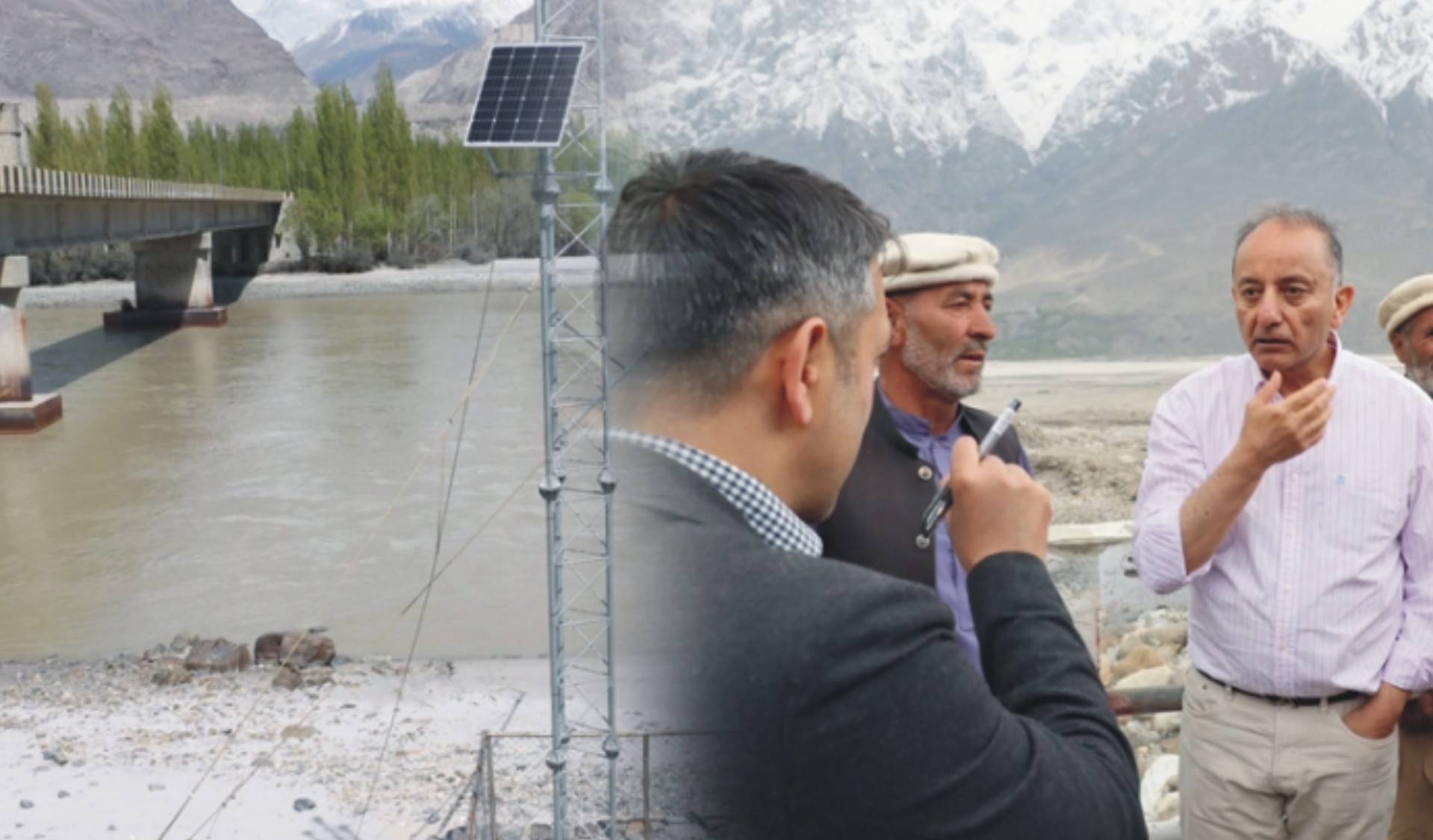
ISLAMABAD:Federal Minister for Climate Change & Environmental Coordination, Senator Musadik Malik, visited Shigar district in Gilgit-Baltistan to assess projects aimed at mitigating risks from Glacial Lake Outburst Floods (GLOFs).
Accompanied by a UNDP delegation and ministry officials, he reviewed early warning systems, protective embankments, and other initiatives under the GLOF-II Project.The minister inspected damage caused by glacier melt and floods, engaging with local communities to understand their challenges.
He directed officials to submit a detailed report on climate change impacts in the region.Secretary Aisha Humera Moriani briefed Malik on Gilgit-Baltistan’s climate vulnerability and the GLOF-II Project’s role in safeguarding livelihoods.
The minister praised local authorities and stakeholders for their resilience efforts, stating, “Their unwavering work in mitigating GLOF risks is commendable.”Commissioner Baltistan Kamal Khan and other officials provided updates on project progress and its impact on vulnerable communities.
Meanwhile, the Karakoram Highway (KKH) was blocked due to a heavy landslide in the Tatta Pani area in Diamer district of Gilgit-Baltistan, leaving hundreds of passengers stranded while travelling to and from Islamabad.
Landslides continued to affect many areas of GB on Tuesday, even as the weather improved after four days of intermittent rain and snowfall. With climate change making weather patterns erratic, the mountainous region received heavy rainfall and snowfall during months when the weather is relatively better.
Diamer Administration Public Relations Officer Raja Ashfaq Tahir, said, “The landslide occurred on Wednesday afternoon, and heavy machinery has been dispatched to the area to remove debris and restore traffic flow.”
In response to a question, Tahir noted that although the weather had been sunny for the past three days, landslides had occurred consecutively on both the KKH and the Jaglot-Skardu Road. “Landslide activity had increased following recent heavy rains, which also triggered flash floods, strong winds, and hailstorms across the region,” he said.
Tahir stated that the blocked section of the highway at Tatta Pani is expected to be cleared within a few hours, allowing stranded passengers to resume their journeys.
Tatta Pani is known to be a landslide-prone area — a roughly 5-kilometer stretch vulnerable due to its muddy terrain. The road in this section is frequently blocked, causing significant hardship for travellers commuting between GB and other parts of the country.
The KKH from Mansehra to Chilas serves as a crucial route during the winter months, as the Babusar Top remains closed until May due to snow. On Tuesday, Police said the KKH, Baltistan Road and other major roads have been opened for traffic after landslides had blocked the roads earlier.