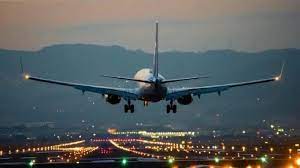
Amid the prevailing tensions between the two nuclear-armed nations in South Asia, Pakistan extended its airspace closure for all Indian-owned or Indian-operated airlines until June 24, according to a notice to airmen (NOTAM) issued by the Pakistan Airports Authority.
The restriction applies to “all aircraft registered, operated, owned, or leased by India” and includes Indian military aircraft, the authority said in a statement.
Meanwhile, India also extended airspace closure for Pakistan or Pakistan-operated airlines till June 23.
The move extends restrictions first imposed last month amid continuing tensions between the two nuclear-armed neighbours following the Pahalgam attack in April, which resulted in the deaths of 26 tourists in Indian Illegally Occupied Jammu and Kashmir (IIOJK).
India had unilaterally closed its airspace to Pakistani flights on April 23, prompting a reciprocal ban from Islamabad the next day. India then took several other measures against Pakistan.
Later, on May 6-7, India launched unprovoked attacks on multiple Pakistani cities. In response, the armed forces of Pakistan launched a large-scale retaliatory military action, named “Operation Bunyan-um-Marsoos”, and targeted several Indian military installations across multiple regions on May 10.
Pakistan’s response led to the mobilisation of the global powers, following which a ceasefire was reached, which remains intact.
While India’s aviation industry has faced heavy losses, the impact on Pakistani aviation has been minimal. With only one eastbound flight rerouted via China and limited operations in the Far East, Pakistan’s aviation sector remains largely unaffected.
This is not the first time Pakistan has imposed such restrictions. Airspace closures were previously enacted during the 1999 Kargil conflict and the 2019 Pulwama crisis, both instances in which India faced greater aviation disruptions than Pakistan.
Financial blow to Indian airlines
According to sources, Indian airlines have suffered losses exceeding Rs8 billion in the past month alone. These include Rs5 billion in additional fuel costs and Rs3 billion in expenses incurred due to forced stopovers by long-haul flights.