GHULAM ABBAS
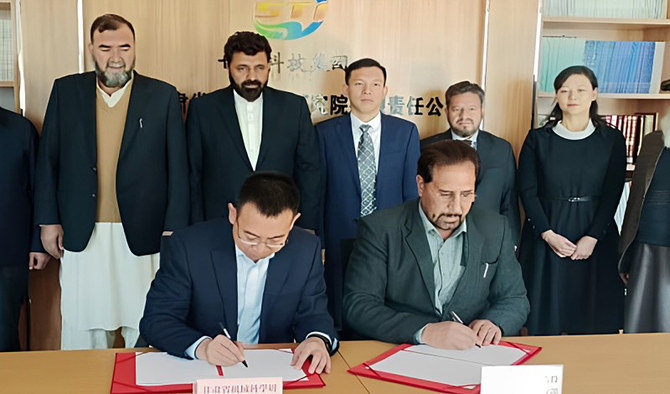
ISLAMABAD: The Geological Survey of Pakistan (GSP) and the China Geological Survey have signed a Memorandum of Understanding (MoU) to jointly explore lithium and other valuable minerals in the Gilgit-Baltistan region. The partnership will include joint field expeditions, geochemical sampling, technical training, and exchange visits to strengthen mineral exploration efforts.
The signing took place during the Pakistan Minerals Investment Forum 2025 (PMIF25), held in Islamabad. The forum was attended by the chief ministers of Gilgit-Baltistan, Balochistan, Sindh, and Punjab, along with key federal ministers and international delegates.
Addressing the forum, Prime Minister Shehbaz Sharif highlighted the untapped potential of Pakistan’s mineral wealth, estimated to be worth trillions of dollars. He stressed that effectively harnessing these resources could reduce the country’s reliance on international financial institutions such as the International Monetary Fund (IMF).
The Prime Minister called for a unified national policy that prioritizes value addition by processing raw materials into finished or semi-finished products before export. He also emphasized the importance of incorporating technology transfer clauses into investment agreements to ensure long-term economic benefits for Pakistan.
Sharif invited both local and international investors to take advantage of the country’s rich mineral deposits, adding that the federal and provincial governments, along with relevant institutions, were committed to positioning Pakistan as a leading global player in mineral resource management.
He also proposed the establishment of vocational training centers through joint ventures to equip Pakistani youth with modern technical skills, thereby strengthening the country’s industrial capacity.
The two-day summit aimed to attract foreign direct investment and long-term partnerships by showcasing Pakistan’s mineral potential. Over 2,000 participants attended, including 300 international delegates from countries such as the United States, China, Saudi Arabia, the United Kingdom, Finland, Denmark, and Kenya.
In his opening remarks, Deputy Prime Minister Ishaq Dar described Pakistan as “strategically positioned to emerge as a global mining powerhouse,” citing vast deposits of minerals, including Reko Diq, rare earth elements, industrial minerals, and gemstones such as peridot and emerald.
Dar also launched the National Minerals Harmonisation Framework 2025—an integrated reform package aimed at attracting investors and streamlining policy in a sector that currently contributes just 3.2% to the national GDP.
“The mineral sector can redefine our economy, supply chains, and export profile,” Dar said. “We are laying the foundation for a robust ecosystem involving both local and international stakeholders.”
The event also saw strong institutional backing, with attendance from Chief of Army Staff General Asim Munir and support from both federal and provincial governments.
International interest was evident, with the United States represented by Eric Meyer, Senior Bureau Official at the Bureau of South and Central Asian Affairs, while Saudi Arabia’s Vice Minister for Minerals expressed interest in exploring strategic cooperation.
Commerce Minister Jam Kamal, speaking during a panel discussion, said Pakistan’s mineral potential could attract global attention if security and regulatory issues were addressed. “Balochistan can lead the way in this transformation,” he noted, encouraging foreign companies to pursue long-term partnerships through joint ventures and public-private collaborations.