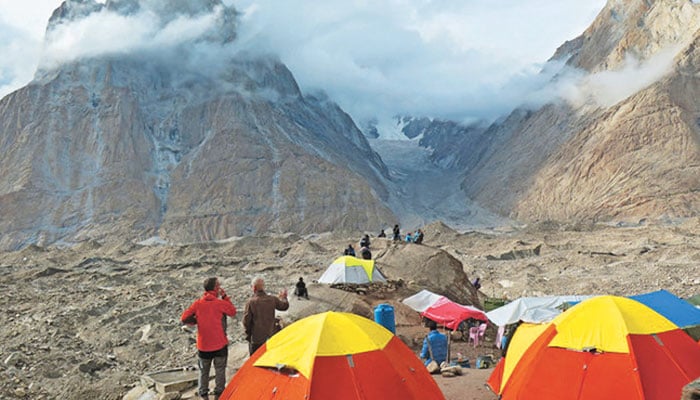
GILGIT: Gilgit-Baltistan (GB) received nearly 25,000 foreign tourists in 2024, making up around half of all international visitors to Pakistan, according to an official document released.
The figures come as the region gains recognition as a leading global destination, with major outlets like CNN, BBC, and the Financial Times listing it among the top places to visit in 2025.
The document stated that only 2,300 tourists obtained official mountaineering and trekking permits after paying royalty fees. The remaining 22,000 were allowed to travel across designated areas without permits or payments.
A Tourism Department official told The News that new routes had been opened this year to encourage more visitors, many of which do not require permits.
This season, around 700 foreign tourists have applied for mountaineering and trekking visas through the Pakistani government. However, only two have so far sought permits from Gilgit-Baltistan authorities, which are usually issued within two to three days.
Permit issuance was temporarily halted recently after the Pakistan Tour Operators Association (PATO) challenged a recent fee hike in GB’s Chief Court. The court, however, suspended the process pending a final decision.The Tourism Department confirmed it will resume issuing permits once the court rules on the case.
Earlier, the Gilgit-Baltistan government has introduced new entry fees for vehicles and motorcycles entering the region as part of an initiative to regulate tourism and support sustainable development.
A notification issued by the administration outlines the new charges: tourist vehicles will now be subject to a fee of Rs2,000, while motorcycles entering GB will pay Rs500. These fees aim to manage the growing influx of visitors to the scenic region, renowned for its picturesque landscapes and high-altitude destinations.
The revenue generated from these charges will be allocated for maintaining infrastructure, waste management, and preserving the region’s natural beauty. With a surge in tourism putting strain on GB’s roads and facilities, these measures are seen as essential for ensuring the long-term sustainability of the region’s resources.
In addition to entry fees, the government has revised permit charges for mountaineering and trekking, capitalising on the rising interest in GB’s peaks and trails.
Officials said these changes reflect a broader commitment to sustainable tourism practices and responsible resource management, ensuring the region can accommodate increasing tourist numbers without compromising its ecological balance.
The Gilgit-Baltistan government has introduced new entry fees for vehicles and motorcycles entering the region as part of an initiative to regulate tourism and support sustainable development.