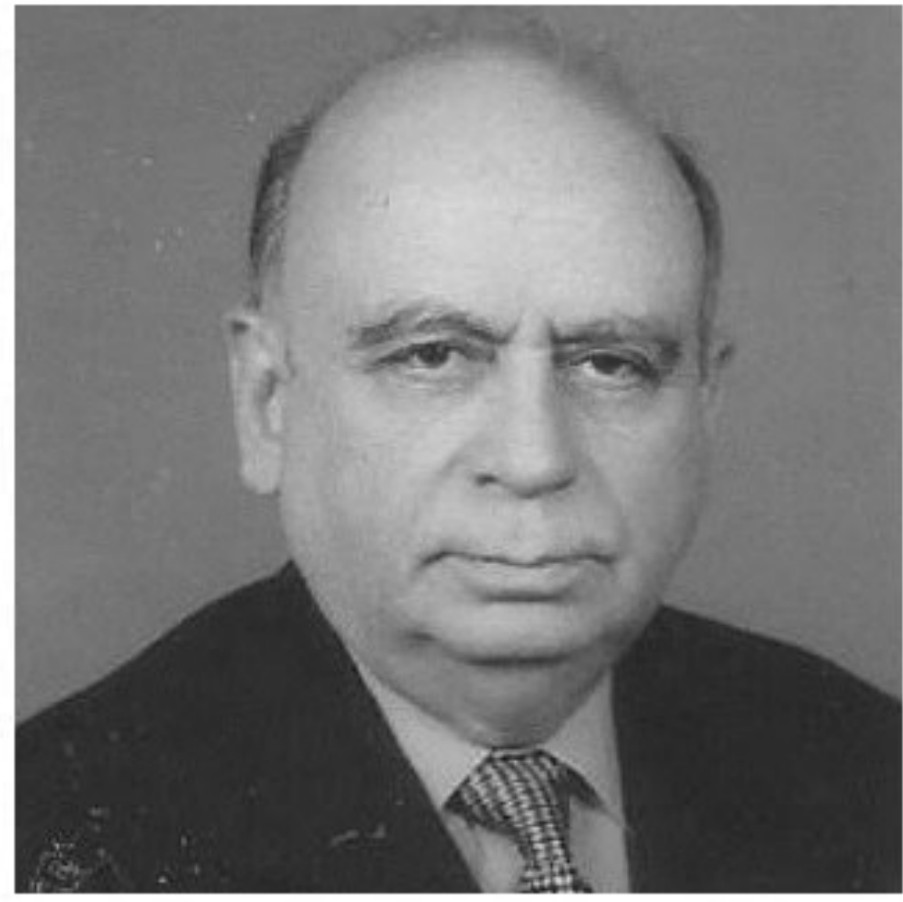
Afzal Ali Shigri
In 2019, a landmark judgement by the Supreme Court rekindled hopes of accession to Pakistan among the residents of Gilgit-Baltistan (GB). The region’s status as part of the disputed Kashmir territory had long obstructed this aspiration. The same year also saw the revocation of Article 370 in occupied Kashmir by India, which transformed Jammu and Kashmir into two union territories, sparking controversy.
Despite demands by locals for accession, Pakistan has tarried in integrating GB. In 2015, the PML-N government established a committee under Sartaj Aziz to examine the region’s status. It largely endorsed the residents’ demands for integration and constitutional rights. However, the government later issued the contentious Gilgit-Baltistan Order, 2018, presenting it as a move towards greater empowerment. This order reversed key provisions of the more favourable 2009 Gilgit-Baltistan Empowerment and Self-Governance Order that had been introduced by the PPP government.
When the PTI came to power, it reneged on its commitment to address the issue, deflecting local political pressure by creating the miasma of progress towards provincial status for GB. However, it maintained the undemocratic 2018 order rooted in colonialist regulations. It also scuttled a bill proposed by the Balochistan Awami Party for granting GB provincial status.
Amid these developments, civil society challenged the situation in the Supreme Court, where, after extended deliberations, a significant judgement was delivered. A seven-member bench, led by the chief justice, summarised its findings thus:
“We now turn to a question of importance, which is crucial for the success of the project of creating a framework of governance for GB of a constitutional nature. Any framework of such a nature necessarily implies, and indeed it could be said demands, a degree of continuity in the manner provided in the Proposed Order… . Otherwise, what good is it? Of what value are the fundamental rights enshrined in such a framework, and how independent can a judiciary created thereby be, if the structure is impermanent, and even ephemeral? This is all the more so where the framework is put in place in exercise of executive authority, by means of an Order promulgated by the President. Such an Order can be put in place … with a stroke of the pen, but likewise instantly cast into oblivion.
“Indeed, the manner in which the 2009 Order was replaced by the 2018 Order is a telling illustration of the point now under consideration. During the course of the hearing of these petitions, and in light of the submissions by various learned counsel and the observations of the Court, the Federal Government constituted a committee …to review the entire matter, and place before the Court a draft of a fresh Order for the governance of GB. This was duly done, and the draft … examined by the Court… . In our view, that draft, as modified in the manner hereinafter stated, does provide a suitable framework in the hue of constitutional nature for the governance of GB. The Federal Government stands committed to promulgating the same … in substitution of the 2018 Order.”
The following speaking orders were then issued.
I. “The Proposed Order … shall be forthwith promulgated by the President on the advice of the Federal Government, and in any case within a fortnight hereof;II. “No amendment shall be made to the Order as so promulgated except in terms of the procedure provided in Article 124 of the same, nor shall it be repealed or substituted, without the instrument amending, repealing or substituting (as the case may be) the same being placed before this Court by the Federation through an application that will be treated as a petition under Article 184(3) of the Constitution. Nothing in this judgement shall be construed to limit the jurisdiction conferred on this Court by the Proposed Order itself; and
III. If the Order promulgated is repealed or substituted by an Act of Parliament the validity thereof, if challenged, shall be examined on the touchstone of the Constitution.“Despite this, the PML- government, and later the PTI government ignored the court’s directives. Citing a petition from a private individual as an excuse, the PTI government delayed implementing the judgement. Rather than upholding its verdict, the Supreme Court scheduled hearings and considered unverified claims that the public wanted parliamentary approval for the legislation, embracing this weak rationale for postponement.
With local assembly elections approaching, political parties have renewed calls for GB’s provisional provincial status and issued a press statement collectively. However, residents remain cautious. The current order of 2018 has four key flaws: The order grants the prime minister unbridled authority devoid of accountability. It reduces the council with local representation for federal subjects to a consultative, powerless entity. The appointment process for superior courts lacks transparency and relies on government discretion, without an institutional framework for merit-based selection. The 2018 order retains the power to amend the entire governance structure arbitrarily.
Given the need for democratic and accountable governance in GB, the quest for a provisional province warrants immediate attention. To rectify its earlier missteps, the PML-N must implement the judicial verdict and issue the 2019 legal framework draft as directed by the court. Such a move would address the breaches of the draconian 2018 order, issued against the Sartaj Aziz Committee’s recommendations. The least the people can expect from the prime minister is respect for the apex court.Courtesy Dawn Newspaper
Govt extends Point-of-Sale system to AJK businesses to enhance tax transparency
The federal government has expanded the Point-of-Sale (POS) system to businesses in Azad Jammu and Kashmir (AJK), integrating them into Pakistan’s digital taxation network.
The initiative, led by Pakistan Revenue Automation (Pvt) Ltd (PRAL) in collaboration with the Central Board of Revenue (CBR), AJK, aims to streamline tax collection, improve transparency, and curb tax evasion.
Officials confirmed that PRAL successfully launched the POS system at Khaadi and KFC in Mirpur, marking the beginning of a broader rollout in AJK. The move aligns with the government’s national agenda to digitize economic transactions and ensure real-time documentation of business activities.
The inauguration ceremonies were attended by senior government officials, PRAL representatives, and business leaders, including Most Senior Minister Col (R) Waqar Noor, Minister for Development Azhar Sadiq, Minister for Law Mian Waheed, and Chamber of Commerce representatives. PRAL’s key personnel, including General Manager-SD Abid Naeem and Head of Commercials Farheen Azhar, were also present.
During the events, speakers emphasised that the POS system is not just a technological upgrade but a transformative step in strengthening economic resilience and accountability. The system records transactions digitally, reducing manual errors and preventing revenue leakages.
The government’s broader vision for a digital economy includes expanding the POS network nationwide to create an inclusive and transparent financial ecosystem. PRAL, as a key player in revenue automation, has reiterated its commitment to supporting the government’s drive toward digital transformation.
Following the inauguration, stakeholders engaged in discussions on future initiatives to accelerate AJK’s digital integration, ensuring the region benefits from enhanced financial documentation and ease of business operations.
The expansion of the Point-of-Sale (POS) system to Azad Jammu and Kashmir (AJK) was previously hindered by jurisdictional challenges, as AJK operates under its own Central Board of Revenue (CBR-AJK) rather than the Federal Board of Revenue (FBR). Unlike Pakistan’s provinces, AJK has a distinct tax administration under the AJK Interim Constitution Act, 1974, which grants it autonomy in fiscal matters.
This separation meant that FBR’s taxation policies, including the POS system, could not be directly enforced in AJK without a formal agreement between the two governments. Additionally, due to AJK’s unique status, integrating its businesses into Pakistan’s national taxation network required careful negotiations to maintain its independent governance framework.
To address these challenges, the federal government collaborated with CBR-AJK and Pakistan Revenue Automation Ltd (PRAL) to implement the POS system within AJK’s own legal structure. This approach ensures that tax collection remains under local jurisdiction while enabling businesses to document transactions digitally, improving tax transparency and reducing evasion.
Meanwhile, the Pakistan Muslim League-Nawaz (PML-N) in Azad Jammu and Kashmir (AJK) has warned the coalition government against any attempt to amend the region’s constitution for the benefit of a select few, asserting that it will oppose such moves at every level.
Participants included PML-N regional president Shah Ghulam Qadir, senior vice president Mushtaq Ahmed Minhas, secretary general Chaudhry Tariq Farooq, secretary information Barrister Iftikhar Gillani, deputy information secretary Farhan Azam, and former prime minister and central vice president Raja Farooq Haider.
“The PML-N will not be part of any constitutional amendment. Rather, it will strongly resist any such attempt both inside and outside the Legislative Assembly,” the meeting resolved, emphasizing that no one should be allowed to tamper with the constitution without justifiable reasons.
It was also decided that the party would engage with political forces both within and outside the assembly to counter any such moves. Political sources told Dawn that some members of the coalition government were eager to create additional constituencies in the AJK Assembly to secure their political future.
Amid ongoing negotiations and political manoeuvring, several other proposed amendments had also surfaced, some of which reportedly involved surrendering certain powers of the AJK government in exchange for other concessions, the sources said.
“We are closely monitoring the situation and will not allow anyone’s nefarious designs to succeed at the expense of the interests of the people of Azad Kashmir and the state of Pakistan,”commented one of the meeting participants, while speaking to Dawn on condition of anonymity.