In places often overlooked or underrepresented, women continue to lead change through community work, creative enterprise, and service to others. These efforts rarely make headlines, but when women from different walks of life come together, they offer a powerful reminder of the influence they already hold, and the impact they can build collectively.
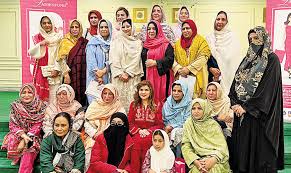
Recently, Skardu hosted such a moment. A roundtable gathering by LadiesFund brought together women from across Gilgit-Baltistan – judges, educators, artists, social workers, doctors, chefs, and entrepreneurs. Set against the stark beauty of the northern mountains, the event was part of a wider initiative by Dawood Global Foundation to foster connection and collaboration among women across Pakistan.
Among the many attending was Princess Nazia Batool of Skardu, who served as the event’s Chief Guest. “I am very thankful to the organisation. They are appreciable to give women of Gilgit Baltistan to express and show their skills to the nation and I hope LadiesFund will support them in all aspects,” she said.
Also present was Senior Civil Judge Bushra Rehman. “Gilgit-Baltistan is not only known for its real beauty and serenity; it has beauty in the form of talent, skills, beautiful souls, and brave personalities who have emerged at both national and international levels,” she shared. “I, being the daughter of GB, am proud of my country, and the people of my nation inspire me at every walk of life.”
The roundtable included introductions, a discussion of upcoming initiatives, and conversations around future projects focused on skill development, entrepreneurship, and cultural preservation.
Chef Zeenat Adnan made a pink-themed cake for the occasion, which was ceremonially cut by the Princess. “I am very happy to be part of this and very proud of the women of Skardu and Pakistan,” said Hasina Haider, founder of Amancha Guest House.
For many, the event offered not just visibility, but a chance to build networks. As summed up by Maryam Batool, whose salon was a beauty partner, “I believe this will be a new ray of hope for the hardworking, skilled, and courageous women of Baltistan.”
Meanwhile, in the mountains of Hunza, women are breaking barriers by running successful businesses, something rare in many parts of the country.One example is Bibi Amina, who started a carpentry workshop in 2008. She now employs 22 people and has trained about 100 women in woodworking. This is unusual because women make up only a small part of Pakistan’s formal workforce.
Hunza Valley, home to about 50,000 people, has a high literacy rate of 97% for both men and women, thanks to early education efforts by the Aga Khan family. This is much higher than the national average. As a result, people’s attitudes toward women working have changed.