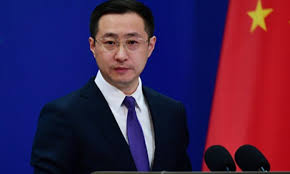
BEIJING (Xinhua/Internews): China has launched an “ASEAN (the Association of Southeast Asian Nations) Visa” for the 10 ASEAN countries and ASEAN observer Timor-Leste, Chinese foreign ministry spokesperson Lin Jian told a regular press briefing.
According to Lin, China will issue the corresponding category of “ASEAN Visa” for business personnel from the 11 countries, as well as their spouses and children, who meet the requirements. The visa will allow multiple entries within five years and a maximum stay period of 180 days.
Lin said that the “ASEAN visa” has been launched on the basis of comprehensive mutual visa exemption with countries such as Singapore, Thailand and Malaysia, as well as the issuance of the “Lancang-Mekong visa” for Mekong River nations, aiming to further facilitate cross-border travel within the region.
In recent years, the building of the China-ASEAN community with a shared future has been continuously advanced, and important achievements have been made in jointly building a common home that features peace, tranquility, prosperity, a beautiful environment, and friendship, Lin added.
Noting that China and Southeast Asian countries have frequent personnel exchanges, Lin said further facilitating such exchanges is a common aspiration for both sides.
Starting June 1, China began implementing a trial policy granting unilateral visa-free entry to citizens of Brazil, Argentina, Chile, Peru and Uruguay. It has also recently rolled out visa-free access to all Gulf Cooperation Council (GCC) countries.
Commenting on China’s visa-free policy, Lin noted that this is the first time China has extended such access to countries in Latin America and the Caribbean, bringing the total number of nations eligible for unilateral visa-free entry to 43.
“The growing list of nations granted with visa-free entry into the country reflects China’s strong commitment to advancing high-level opening up, while the continuous optimization of measures to facilitate cross-border personnel exchanges underscores the country’s concrete efforts to help build an open world economy,” the spokesperson said.
In the first quarter of this year, the number of foreigners entering China through various ports exceeded 9 million, an increase of more than 40 percent compared with the same period last year. In the first four months, more than 18,000 foreign-invested enterprises were newly established in China, up 12.1 percent year on year, according to Lin.
“In the future, China will continue to optimize its entry policies and expand the scope of visa-free countries so that more foreign friends can come to China to experience better product supply, more diverse consumption scenarios and more convenient service guarantees, and share prosperity with other countries through greater openness and deeper cooperation,” Lin said.
Meanwhile, Chinese Vice Premier Ding Xuexiang on Tuesday called for strengthening financial cooperation among member states of the Shanghai Cooperation Organization (SCO) to give strong impetus to the development of regional countries.
Ding, also a member of the Standing Committee of the Political Bureau of the Communist Party of China Central Committee, made the remarks during a group meeting with foreign representatives attending a meeting of the SCO member states’ finance ministers and central bank chiefs.
Ding said that Chinese President Xi Jinping proposed a series of important suggestions and measures for jointly building a more beautiful home of the SCO at the “Shanghai Cooperation Organization Plus” meeting last year in Astana.
China is willing to take its rotating presidency of the SCO as an opportunity and work with other member states to prioritize development, strengthen financial cooperation, expand the local currency settlement, promote digital inclusive finance, and actively work for the establishment of an SCO development bank, Ding said.
Speaking on behalf of the foreign side, SCO Secretary-General Nurlan Yermekbayev spoke highly of the work carried out by China as the rotating chair of the SCO, and expressed the willingness to collaborate with the Chinese side to uphold the “Shanghai Spirit” and promote regional prosperity and development.