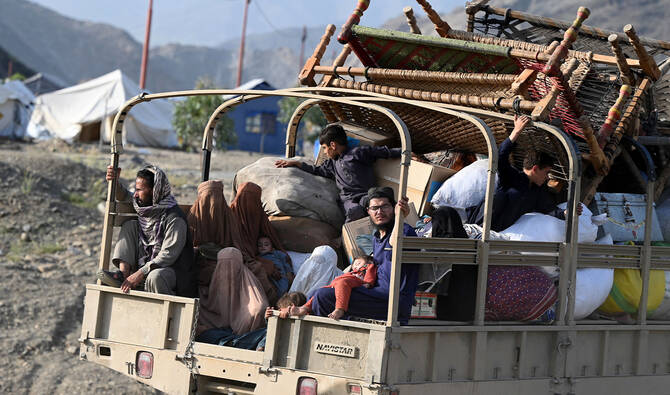
More than 100,000 Afghans have left Pakistan in the past three weeks, the interior ministry said, after Islamabad announced the widespread cancellation of residence permits, reported AFP.
Pakistan has recently witnessed hundreds of Afghans dragging their belongings across the Torkham and Chaman borders as the government began its second drive of deportations on March 31, which targeted those holding Afghan Citizen Cards — an identity document jointly issued by the Pakistani and Afghan governments in 2017.
The drive is part of a larger campaign that the government began in 2023 to repatriate all illegal foreigners. Under the first phase, all undocumented Afghans were deported, those who didn’t have identity proof.
Analysts say the expulsions are designed to pressure neighbouring Afghanistan’s Taliban authorities, which Islamabad blames for fuelling a rise in border attacks.The interior ministry told AFP that “100,529 Afghans have left in April”.
Convoys of Afghan families have been heading to the border since the start of April when the deadline to leave expired, crossing into a country mired in a humanitarian crisis.“I was born in Pakistan and have never been to Afghanistan,” 27-year-old Allah Rahman told AFP at the Torkham border on Saturday.
“I was afraid the police might humiliate me and my family. Now we’re heading back to Afghanistan out of sheer helplessness.”Afghanistan’s prime minister Hasan Akhund on Saturday condemned the “unilateral measures” taken by its neighbour after Pakistan’s foreign minister Ishaq Dar flew to Kabul for a day-long visit to discuss the returns.
Akhund urged the Pakistani government to “facilitate the dignified return of Afghan refugees”.Many Afghan’s are leaving voluntarily, choosing to depart instead of facing deportation, but the UN refugee agency UNHCR said that in April alone, more arrests and detentions took place in Pakistan — 12,948 — than in all of last year.
Pakistan’s security forces are under enormous pressure along the border with Afghanistan as they battle a growing insurgency by ethnic nationalists in Balochistan, and the Pakistani Taliban and its affiliates in Khyber Pakhtunkhwa.
Last year was the deadliest in Pakistan in a decade.The government has frequently said that Afghan nationals take part in attacks and blames Kabul for allowing militants to take refuge on its soil, a charge Taliban leaders deny.