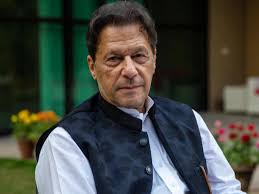
RAWALPINDI: Despite waiting for talks with stakeholders in power, jailed Pakistan Tehreek-e-Insaf (PTI) founder Imran Khan has predicted that the incumbent government, led by Pakistan Muslim League Nawaz (PMLN), is left with only two months in power.
“The government is plunging into a quagmire; however, they [rulers] are fools and unable to understand,” he said during an informal conversation with journalists at the makeshift courtroom, set up inside Rawalpindi’s Adiala jail. “I am predicting this from prison that this government has only two months,” Imran said adding that he had enough time but the incumbent rulers were running out of it.
Referring to his Wednesday statement on conditional apology over the May 9 riots, the former premier said a wrong perception was created that he had sought an unconditional apology.
He reiterated that he would apologise if the PTI activists were found involved in the violent protests that broke out in the country last year, following his arrest from the Islamabad High Court (IHC) premises in an alleged corruption case.
“Am I insane to ask our people to attack the army,” said Khan, adding that the PTI workers were not involved in the May 9 riots and they were wrongfully declared “terrorists” for staging peaceful protests.
The cricketer-turned-politician said that his party “only wants justice in the May 9 [events]”. Elaborating on his offer to initiate dialogue, Khan said that he made the offer to hold talks only for the sake of country. “I will not strike any deal no matter how many cases they register against us,” he said adding that a deal is sought by those who had committed any wrongdoing. He also admitted that he had not received any offer for negotiations so far.
The former premier claimed that “railookattay” in the government were provoking the army against the PTI, just to eliminate it. He disclosed that he would present a witness in the Al-Qadir Trust case, also known as the £190m National Crime Agency (NCA) scandal, which reportedly caused a loss of £190 million pounds to the national exchequer. However, he did not disclose the name of the witness, fearing that the witness would be abducted if he exposed his identity.