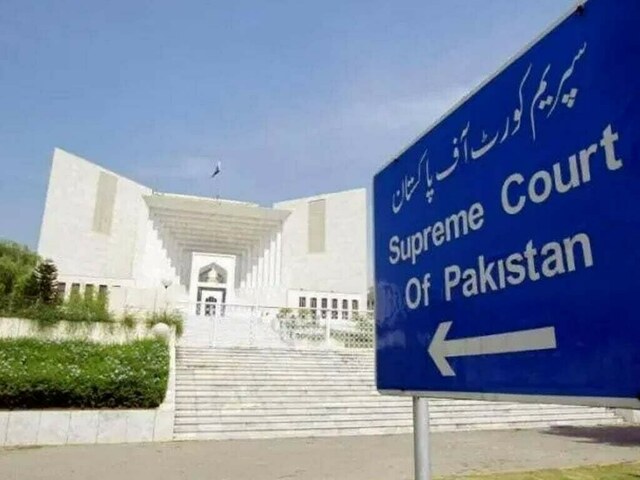
ISLAMABAD: The Supreme Court of Pakistan has urged both the federal and Gilgit-Baltistan (GB) governments to collaboratively resolve issues regarding judicial appointments. During a recent hearing, Justice Jamal Mandokhail highlighted the need for government cooperation. He questioned why governments require guidance on such matters.
The court is seeking the federal government’s position on the GB government’s conditional withdrawal of the case. This indicates a desire for clarity on both sides. In addition, the court has asked the GB government to submit a written response for further review.
Justice Mandokhail’s remarks emphasise the importance of judicial appointments in maintaining a strong legal system. He called for proactive engagement from the governments involved to address these concerns promptly.
The hearing has been postponed for two weeks, allowing time for the necessary responses. The Supreme Court aims for a fair solution to ensure the effective functioning of the judiciary in Gilgit-Baltistan.
This is pertinent to mention here that lawyers’ bodies in Gilgit-Baltistan have announced a boycott of court proceedings due to the non-fulfillment of their demands, including the long-delayed appointment of judges in the GB Supreme Appellate Court.
According to a statement, a joint meeting of the GB Bar Council, GB High Court Bar Association and district bar associations, chaired by GB High Court Bar Association President Tanveer Akhtar Khan, expressed concern over the non-implementation of lawyers’ demands, despite continuous protests for the past five months.
On Nov 29 last year, the lawyers’ committee met the GB cabinet members to discuss their demands and submitted joint recommendations to the GB chief minister for approval. The chief minister issued directives to address their demands.
However, the meeting condemned the failure to implement the directives and termed it a failure of the government. It unanimously decided to extend the lawyers’ boycott of court proceedings across GB, except for emergency cases. It also decided to stage protests on roads in all 10 districts twice a week.
One of the lawyers’ primary concerns is the vacant positions in the GB Supreme Appellate Court, the region’s highest judicial forum. The prolonged delay in appointments has left around 8,000 cases pending.
Another major demand is the extension of the Lawyers Protection Act to GB by the federal government, a move they argued is essential for ensuring their safety and professional rights.
The proposed Land Reforms draft has also come under criticism from the legal community, who described it as ambiguous and flawed. They demanded that their recommendations be incorporated before it is passed in the GB Assembly, warning that failure to do so would be a violation of local people’s rights.
They urged the GB chief judge to take steps to appoint judges to the vacant positions in labour, consumer, family and ATCs, and assistant registrar’s office.
The lawyers called for the advertisement of vacant civil judge positions and demanded that judicial magistrate posts be separated from civil judge posts, as practiced in other parts of the country, with appointments made from the legal fraternity on merit.
Speaking to the media, Tanveer Khan said that two months ago, GB lawyers and cabinet members met to settle these issues amicably. He said the chief minister had accepted the lawyers’ demands and issued directives, leading to a postponement of their protests. Lawyers had set a deadline until the end of February, but no progress has been made so far, he regretted.
Mr Khan emphasised that the GB Supreme Appellate Court, the highest judicial forum in the region, has been operating with only one judge for the past seven years.
According to rules, a single judge cannot hear cases, causing thousands of important cases to remain pending. He said the completion of the judges’ quorum in the GB Supreme Appellate Court is a demand of the local people as well.
Commenting on the GB Reforms draft, he criticised that lawyers’ objections were ignored, and mineral and mining leases were being awarded to outsiders. He warned the GB government of severe consequences if their demands were not fulfilled.